
BOULDER, CO — In mid-August, Inseng Taekwondo in Boulder will host two world-renowned Taekwondo athletes for a two-day Taekwondo Training Camp, to help athletes of all ages improve performance in sparring and poomsae (forms).
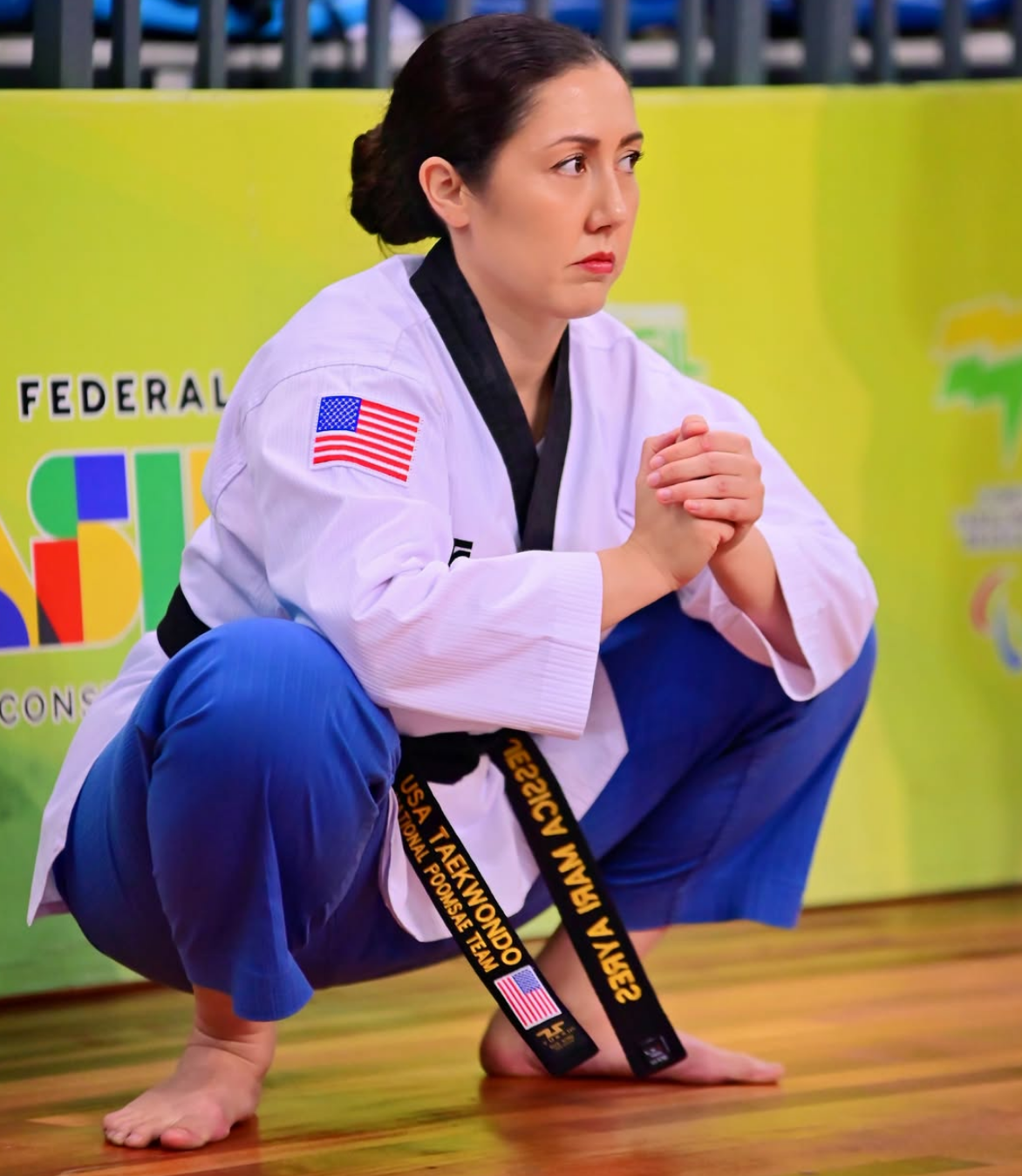
Master Jessica Ayres, a world silver medalist and five-time Team USA National Poomsae member, will lead the all-day poomsae seminar.
Colorado Martial Arts News spoke with Master Ayres over the phone recently to give athletes a glimpse of her rise to success, her elite-training strategy, and what they can expect to gain from the seminar in Boulder later this summer.
Hughes: “You’ve been training in taekwondo since you were 11, and there’s a very significant difference between Olympic sparring and poomsae. So, for our readers who only know Olympic sparring, how would you explain poomsae in one sentence?”
Ayres: “Compared to Olympic sparring, poomsae is really a performance, it’s an execution of all the basic skills to the highest level, compared to sparring, where it’s really more of a game of opportunity.”
Hughes: “You’ve been competing since 1997, so you’ve seen a pretty profound transformation in how the organization (WT) and competitions have evolved. What would you say has changed the most in Poomsae competitions, since you began?”
Ayres: “For poomsae, it’s the rigor that’s required, because before… it was, you know, you step on the mat, you do your one form, one time, and that’s it. Now, you will step on the mat multiple times and compete with multiple poomsae, especially now with ‘randomization’, you don’t have much time to rehearse. So, it really depends on how much you have trained and if and when you can trust your training to come through.”
Hughes: “So it’s being held to a much higher standard?”
Ayres: “Yes, so it’s almost comparable to how Olympic sparring is now. You have to make it happen in the moment, there’s not much time to adjust.”
Hughes: “What would say separates an elite poomsae athlete from someone who just knows the forms and patterns?”
Ayres: They really want to just do more than the form. I’ll take this back to my 2009 Kukkiwon test. My younger brother was taking the test with me. People said that he was more into sparring, but he could do poomsae. He would do it because he knows how to do it, and he’ll do it right, but he did not care about the results so much because (he) felt like ‘oh, I’m just doing a set of steps; put it together, don’t forget, don’t make a mistake’, versus an elite athlete [will] want to push further; do more than just complete the pattern. They want to express the energy behind it and their hard work.”
Hughes: “So you’re saying they have to do it with a sincere sort of intention?”
Ayres: “Yes”
Hughes: “What should athletes or parents expect to get out of this seminar?”
Ayres: “I feel what they would get… is not just the coach’s standpoint, but an active athlete’s standpoint, and someone who’s gone not just from the younger ages but going into a master’s age.”
Hughes “What are people usually surprised to learn after training with you?”
Ayres: “They’re usually surprised by how much physical training has to go into poomsae; it’s not just about being flexible or remembering the steps.”
When asked what athletes need to focus on, Master Ayres replied “breathing”, saying it’s important both from a practical standpoint as well as how the judge’s score the form.
Hughes: “Why do you feel that’s the case?”
Ayres: “Because anytime you’re doing physical activity, you have to think about your breath, and then, with poomsae, there’s fast and there’s slow [movement], so you have be very good at controlling your breath at many points.”
Hughes: “Which would you say is harder: individual performance, pairs, or team synchronization?”
Ayres: “They all have their challenges, because I do have a pair, I do have a team. Individual is very much just figuring out how you want to express yourself, and then with [pairs], it’s a little bit of a compromise. But it’s also nice to have another athlete there with you on the floor, you feel a little bit less in the spotlight in a way. But definitely all three categories have their challenges.”
Hughes: “What do you hope students leave the seminar with besides technique?”
Ayres: Hopefully, a better sense of how they want to approach their own style, or what they can [find] their strength in… Physical strength of their method of expression, whether it’s like their balance, speed, or their overall presence.”
Hughes: “What are some things that Taekwondo athletes, and poomsae athletes in particular, should train in order to becomes as skilled in poomsae as possible?”
Ayres: “Out of everything, I would say training transitions; how you move from one to the next. That’s a big factor when you’re watching. Let’s say we watch everyone do the same pattern… how you move from one move to the next makes a big difference.”
Hughes: “So would you say the emphasis should be on control? When you say transition, what specifically do you think athletes should focus on in those movements to really demonstrate that they’re skilled?”
Ayres: “It’s how you shift your weight, and how you use your breath, and how you use your whole body to move, versus what I call ‘throwing hail marries’; just kind of making it happen… They want to approach the practical, they have to have a partner with them who is also trying to understand it instead of just going through the movements. I’ve done many seminars where I would be paired with another athlete and, yes, they can do the movements, but they don’t understand why they’re doing it. So, it’s helpful if at least one person does know it and helps them to understand it.”
“We’ve been talking about poomsae in the Olympics. Currently, it’s only sparring, but there are already sports that focus on choreographed routines, such as gymnastics and figure skating. Do you still feel that poomsae deserves Olympic recognition?”
Ayres: Absolutely. Especially with the evolution of the freestyle category, it’s a wonderful opportunity for taekwondo to bridge, not just from the head-to-head combat, but the acrobatic, other side of taekwondo.”
So more of the art styles as opposed to the martial component?
Ayres: “Absolutely”
The Poomsae Seminar at Inseng Taekwondo is being held on Sunday, August 16th.
For more information, click here.