
In just two weeks, Inseng Taekwondo in Boulder will host two world-renowned Taekwondo athletes for a two-day Taekwondo Training Camp, to help athletes improve in sparring and poomsae (forms).
Colorado Martial Arts News had the privilege to touch base with Coach Choi Young-Seok, the head coach of Thailand’s national sparring team, who will be leading the sparring seminar, ahead of the training camp.
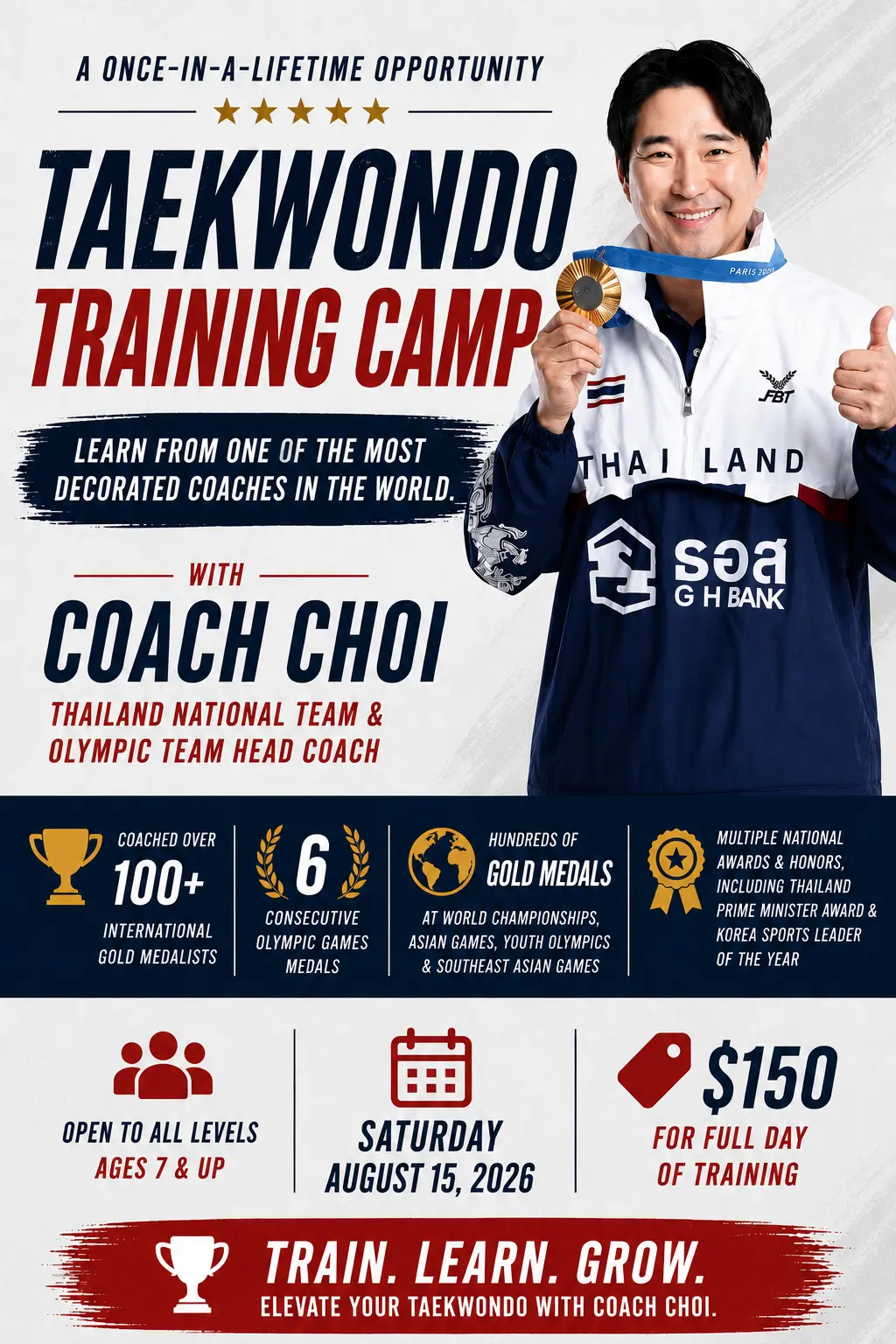
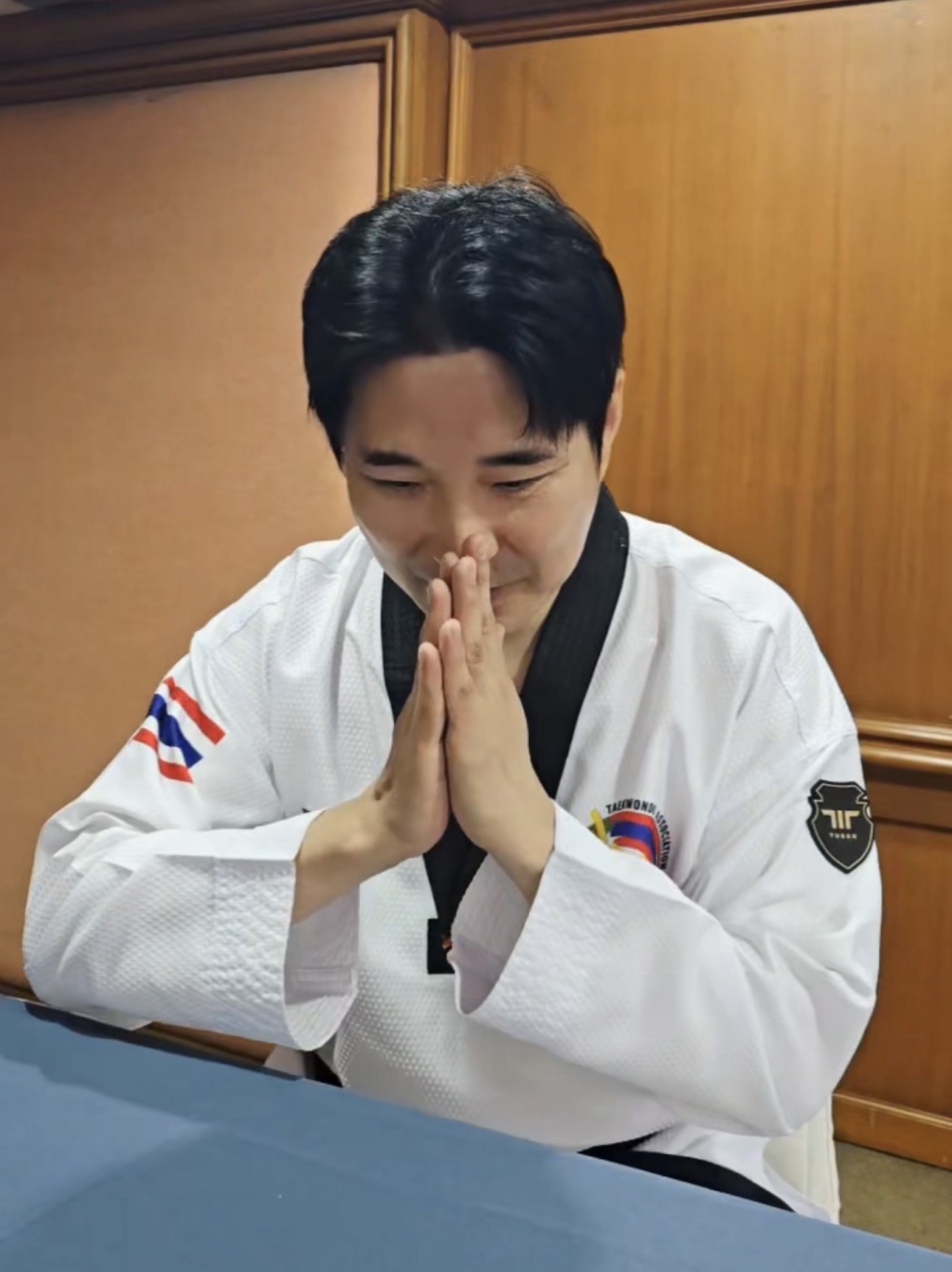
Coach Choi, also known as “Tiger Choi”, is one of the most successful Olympic Taekwondo athletes in the combat sport’s history, famous for turning the unlikely Thailand team into a powerhouse competitor on the world stage. He’s currently an 8th-Dan black belt and International Referee in World Taekwondo, in addition to being an International Coach.
Having started as a middle school Taekwondo sparring coach in Korea between 1999 and 2000, Coach Choi went on to take over the Bahrain national team, and then in 2002 transformed the Thailand team to triumph in the Olympics in the last six Summer Games, including a gold medal in Paris in 2024.
Hughes: Before you became known as a coach, what was your own sparring career like? i.e. weight class, competitive level, and style?
Choi: I played as an athlete until university and was not very famous as one. The final competition was a featherweight fighter, and I have been a fighter from finweight to featherweight.
Hughes: Korean coverage says you were not necessarily a famous athlete but became an elite coach. How did your sparring career influence your coaching style and what do you think you did differently as a coach to become so much more renowned than for being an athlete?
Choi: I was greatly influenced by my high school coach and think our coaching styles are similar. He was diligent in everything he did. It seems like they put in a lot of effort to ensure that the players could develop and grow by always doing something. The most important thing is to prioritize character above all else during training time. Training focus. Even if they lost the game, I guided the players to do their best until the very end.
Hughes: When you first took over Thailand’s team in 2002, what were the biggest sparring problems you had to fix first? What do you think ultimately led to the turnaround that made the team an international contender?
Choi: Actually, when I first coached the Thai national taekwondo team in 2002, I had a lack of experience in international competitions compared to the athletes’ skills, so I personally guided them on how to control distance and compete through sparring matches with the athletes.
Hughes: One report says you personally acted as a sparring partner for Thai athletes before the 2002 Asian Games. What do you remember about those sessions?
What separates good sparring athletes from elite champions? What sort of things do you emphasize for athletes to get an edge in tournaments?
Choi: It (was) my first time in Thailand, (I didn’t) speak any Thai, so I can only do things myself. I had a sparring match with the male, female athletes. I think we probably sparred more in (practice) back then than in actual (competition). I sparred for 10 years, having done it from 2002 to 2012.
Hughes: How has Olympic taekwondo sparring changed since you began coaching? Especially with electronic scoring, video replay, and modern tactics?
Choi: I have participated in six Olympic Games from 2004 to 2024 and have experienced both standard and electronic protective gear (Daedo) systems. Current Taekwondo matches have shifted from focusing on basic kicking techniques to a style focused on scoring points; it appears that a wider variety of kicking techniques have developed compared to the past, and the matches have evolved into more dynamic competitions.
One story worth singling out in Coach Choi’s career took place in the 2020 Tokyo games, when his athlete, Panipak Wongpattanakit, snagged the gold. Although Coach Choi knew she could come out on top, Reuters reported he convinced her to keep competing despite a disappointing performance in Rio in 2016.
Hughes: Panipak Wongpattanakit trained with you from age 13 and became a two-time Olympic champion. What was the biggest technical change you made to her sparring over the years?
Choi: Initially, Panipak couldn’t keep up with the Thai national team’s training due to a lack of stamina. However, her flexibility was different from other athletes, so I researched and guided her on a face kick that suited her. Fortunately, the electronic Hogu system (Daedo) values flexibility and unconventional techniques over power, which seems to have suited Panipak well. When she said she would quit Taekwondo after winning a bronze medal at the Rio Olympics… I persuaded her to trust me and train for just four more years to definitely win a gold medal for Thailand, and she accepted, allowing us to prepare for the 2020 Tokyo Olympics again.
Hughes: Your reputation is intense training. How do you balance hard sparring, injury prevention, and long-term athletic development?
Choi: Intensive training is important, but preventing injuries is also crucial. The Thai team maximizes efficiency by conducting intense training five days a week, preventing injuries through swimming or rest for two days, and ensuring concentration.
Hughes: For a camp open to all levels, what can athletes, and in some cases their parents, expect to get out of the seminar?
Choi: I think it’s a good opportunity, and I am very pleased to share Thailand’s Taekwondo style by training American athletes. I hope that this opportunity will lead to continuous exchange through good memories, (and contribute) to the development of Taekwondo between Thailand and the United States.
The sparring seminar at Inseng Taekwondo is being held on Saturday, August 15th.
Colorado Martial Arts News also interviewed the Poomsae coach, who will be leading the forms seminar on the 16th, back in June.
For more information, click here.